
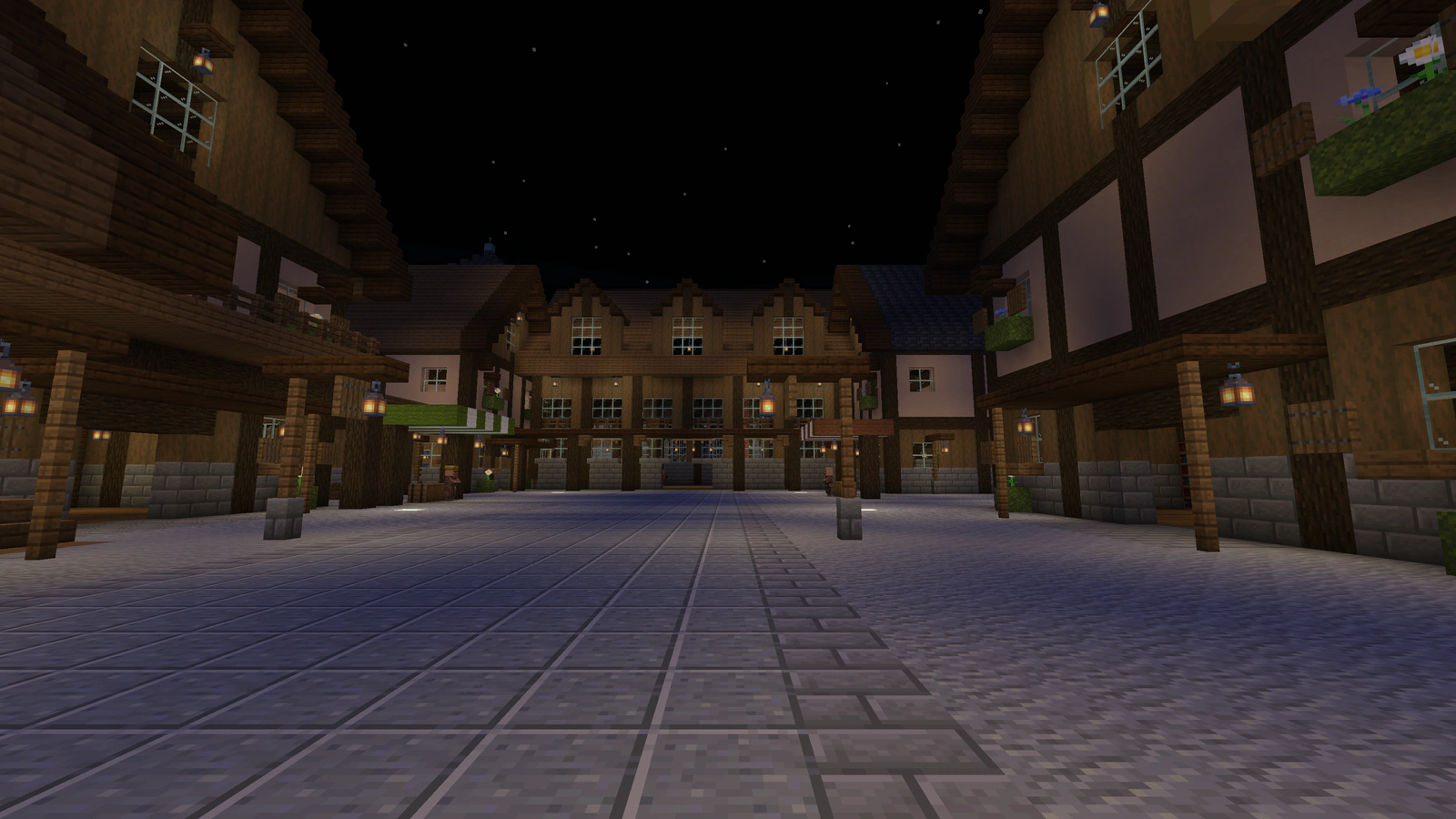
What is FELS?
FELS is a Minecraft survival server with a safe town and its own currency. Explore Frontier, gather resources and build. Bring your finds home and sell them at Market for Credits. Spend those Credits on equipment, storage or a house.
Java and Bedrock players share the same world. You start with 0 Credits and earn them by playing.
Join FELS
Choose Play at the top of this page, then Java or Bedrock. Follow the joining instructions for your device. Use your usual Minecraft account.
Mac and Linux use Java. Phones and tablets use Bedrock. Windows supports both editions. Consoles need an extra step to add a custom server, explained under Play.
Your first trip
You start in Village, the safe centre of FELS. Your first objective is Talk to Garry. Find him near spawn for a short introduction.
- Visit Expeditions. Your first Frontier life is free. Choose a starting area and select Enter Frontier.
- Gather wood, make tools and find food. Mine raw iron, raw gold or diamonds to sell later. Keep iron and gold unsmelted.
- After five minutes of play, your exit portals become available. Follow a Village marker on your map, enter the portal and stand still for ten seconds.
- Back in Village, sell your resources at Market. Put spare items in your free Storehouse box and use /daily to check your challenges.
Village and Homeland
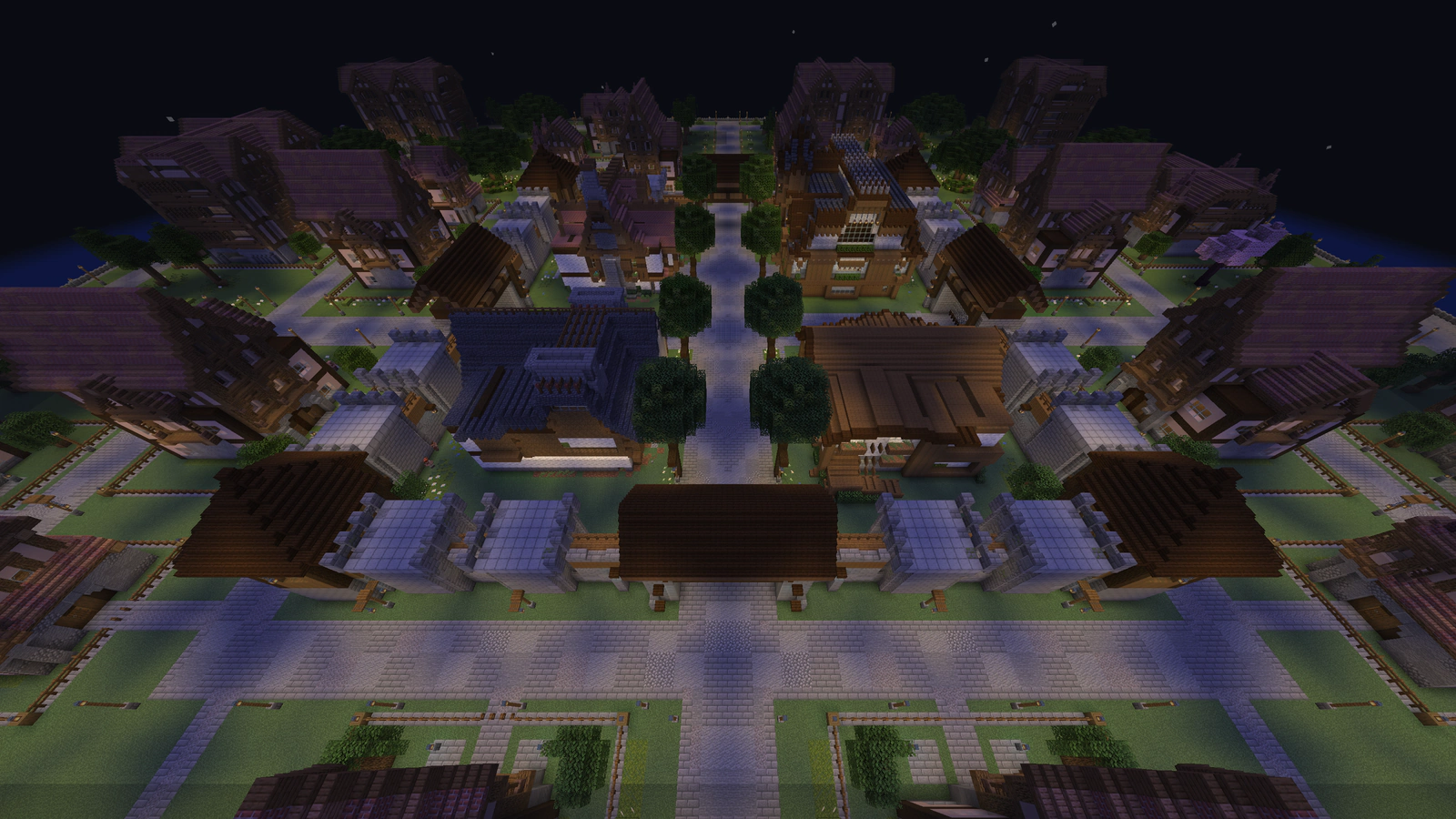
Village is the town centre. Homeland is the neighbourhood around it. Both are safe: you cannot take damage or go hungry here. Streets and public buildings are protected. If you own a home, you can build inside its property.
The four buildings around the centre have screens you can use. Each player sees their own menu, balance and selections.
- Expeditions. Start a trip to Frontier.
- Market. Buy supplies, sell resources and view Daily Challenges.
- Storehouse. Keep items safe, craft and repair equipment.
- Properties. Browse homes, buy one or manage the home you own.
Frontier
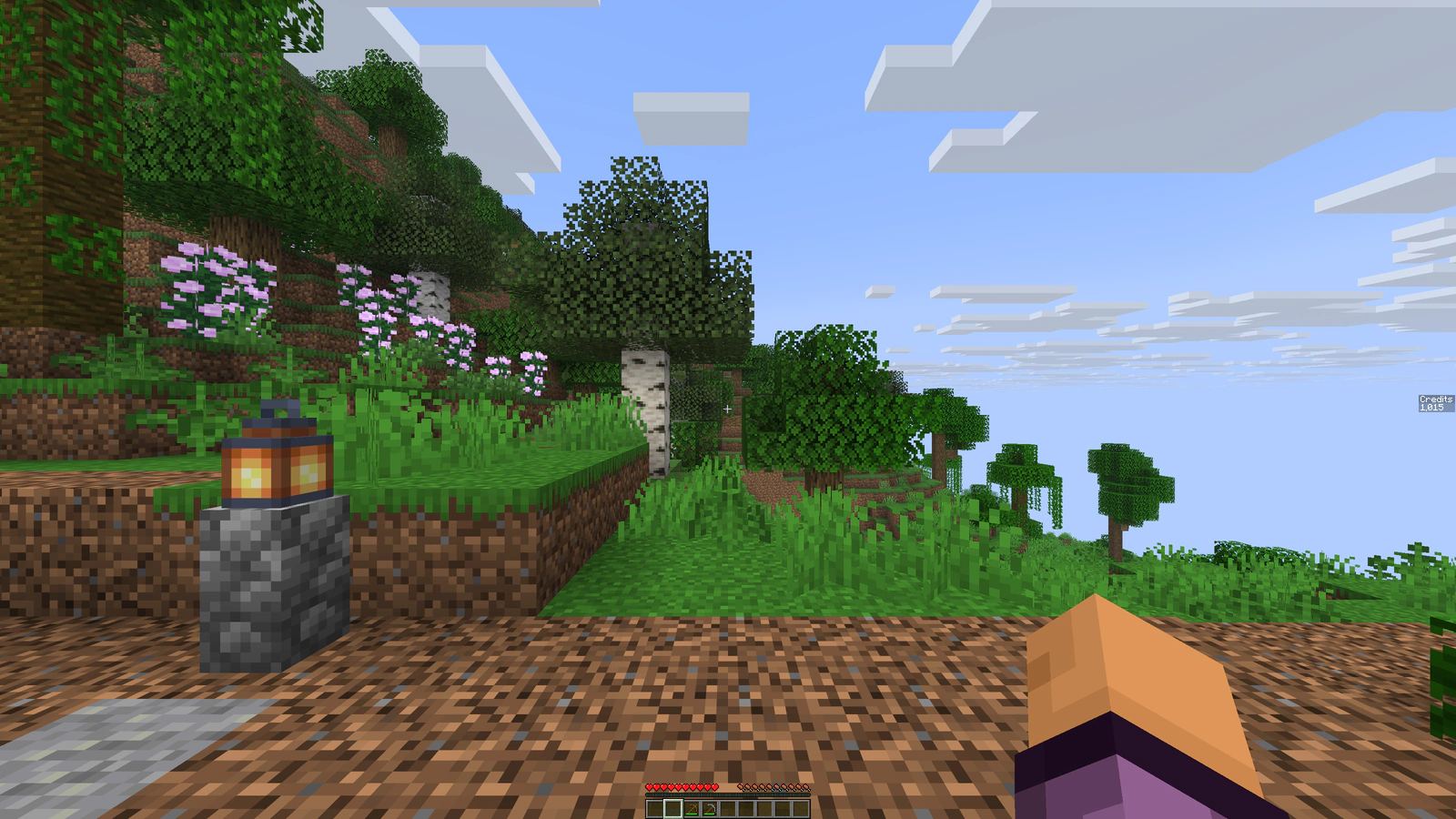
Frontier is the survival world. Mine, build, farm and explore, with normal hunger, monsters, fall damage and player combat. You have brief protection when you arrive. Mining, building or attacking ends it early.
Greenwood, Riverlands and Red Cliffs are different starting areas in one connected world. You can walk between them. Each trip starts at a new random spot. One outer wall marks the edge of the playable world.
You get one free Frontier life every 24 hours. Returning through a portal and going back in keeps that life. If you die after using your free life, another costs 30,000 Credits until the next free one is ready. The Expeditions screen shows your current life and the wait.
Death drops your carried items and sends you to Village, even if you slept in a Frontier bed. Use /logout before leaving the server. Closing the game suddenly can leave your character vulnerable for a short time.
Getting back to Village
Two private exit portals open after five minutes of play. The countdown shows when they will be ready. Only you can see your portals and their map markers.
- Follow either Village marker on your map. Use /expedition if you need directions.
- Walk into the purple portal and stand still for ten seconds. Moving, using an item or taking damage cancels the countdown. You cannot return while in combat.
- You arrive in Village with your carried items. The trip also saves your Daily Challenge progress.
If an exit cannot find safe ground, follow the on-screen directions toward open land. If you are in the Nether or End, return to the Frontier overworld first.
To return without your carried items, open /menu, choose Expeditions, then Leave items and return. Confirming ends your current life and gives up your inventory, armour, experience and carried storage, including any Protected pocket. Your Credits, home, Storehouse and Ender storage stay saved.
Credits
Credits are the game currency. Earn them by selling accepted items at Market, claiming the Daily Challenges reward or owning a home. Spend them on equipment, supplies, storage, a home or another Frontier life after you die. Mining or carrying an item does not give you Credits; you need to sell it.
Your game and website profile show the same saved balance. Dying, logging out or changing your player name does not reset it. In Profile, use Buy Credits to deposit FELS or Redeem to withdraw to your wallet.
Market
Choose Buy or Sell on the Market screen. Select an item and a quantity, check the total, then confirm. Market does not charge a trading fee.
Market buys raw iron, raw gold, diamonds, diamond blocks and diamond equipment. Worn equipment earns less; enchantments do not increase the offer. The Sell page shows the price per item even when you have none to sell.
A completed sale adds Credits to your balance. Purchases go to your inventory or available Storehouse space. If an order is waiting, use Collect.
Daily Challenges
Open Daily Challenges at Market or use /daily. Each item shows a task and your progress. Complete all three to claim the reward shown in the menu.
- Work on the tasks in Frontier. You can complete them in one trip or several.
- Return through your personal exit portal to save your progress. Dying or choosing Leave items and return loses only the current trip's unsaved progress.
- When all three tasks are saved, their items glow. Select a glowing item to claim the Credits shown in the menu.
You can claim once per day. Tasks and progress reset at 00:00 UTC. The menu countdown shows how much time is left.
Storage and crafting
At Storehouse, select Box 1 on the screen to open your free private storage. It has 27 slots and stays safe when you die. You can buy one extra box, for a maximum of two. You do not need a house to use it.
Crafting tables, anvils and stonecutters use normal Minecraft recipes. Repair shows the price for fixing carried equipment. Find items helps you locate items in your Storehouse and home. For smelting, use a furnace in Frontier or your own home.
Carry more
Buy Backpack upgrades at Market and open them with /backpack. You can carry up to 27 extra slots. Backpack contents drop on death; the capacity you bought stays. Shulker boxes and bundles cannot go inside. Carried storage is locked during combat.
Home owners can buy Ender access at Properties. It provides 27 private slots, usable from an Ender Chest in your own home. Its contents survive death.
If you already own a Protected pocket, its one stack survives normal death. It is still lost when you choose Leave items and return. New Protected pockets are not on sale.
Your home
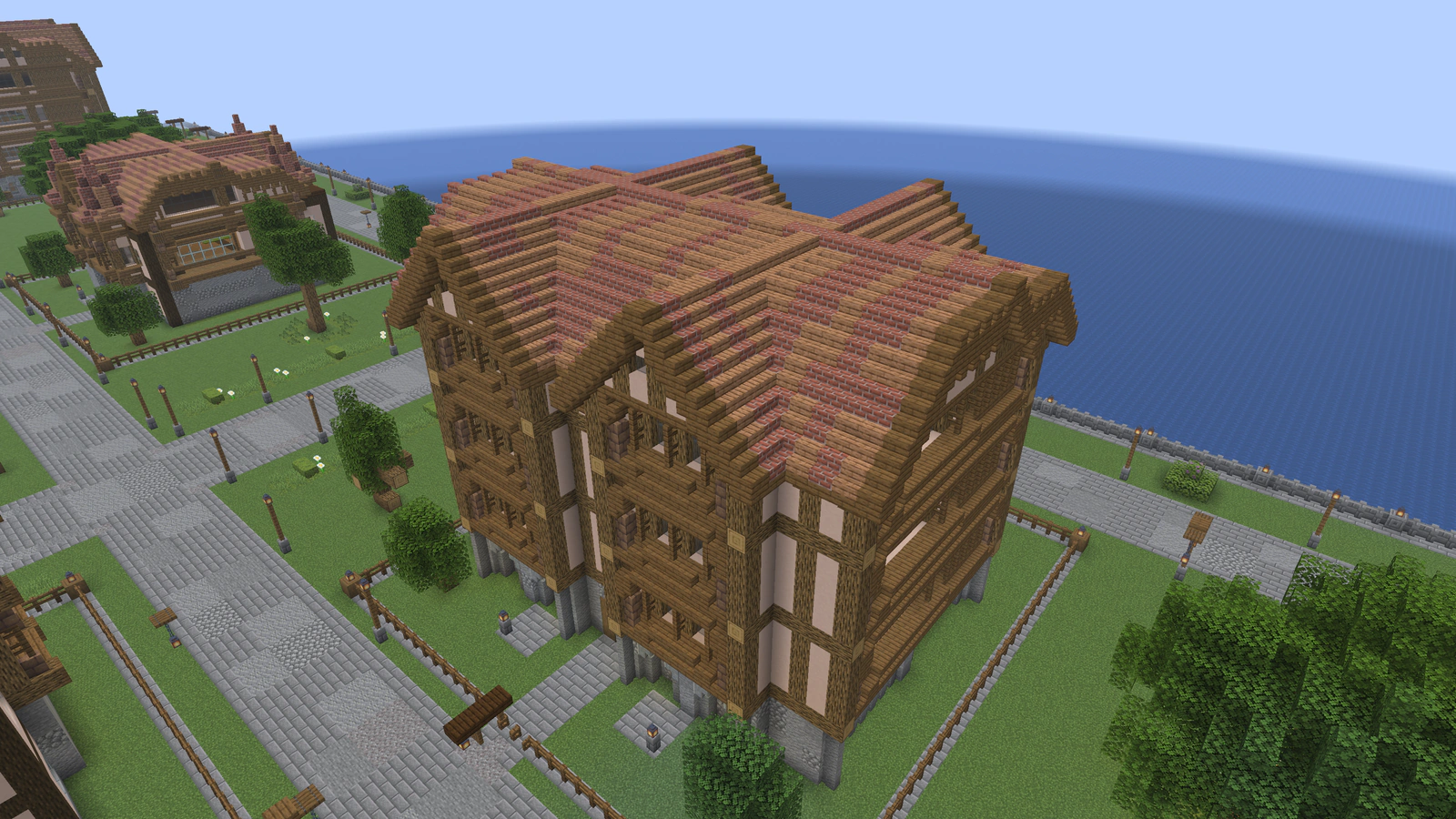
Visit Properties and select a home on the map, or use its For Sale sign. Browse the exterior and room photos, included equipment, storage and price. Choose Buy to review and confirm the purchase.
You can own one home. Its doors open for you, and other players cannot enter or use your chests. Administrators can enter to help with support. A home earns Credits every full 24 hours that you own it. Larger homes pay more; the Properties screen shows each rate and your next payment. Credits are added automatically.
- Building. Build freely inside your property and its height limit. You can dig 20 blocks below the original surface, down to bedrock. Blocks from the original house drop materials under normal Minecraft rules.
- Storage. Home storage shows your chest allowance and upgrades. One box means 27 slots; a double chest counts as two. Included chests can be moved within your property.
- Moving or selling. To sell, empty your personal containers and Ender storage first. To move, select another available home and choose Move. Check the price and space for your items before confirming. Your building stays behind.
- List your home. Select your home on the Properties map and choose List home. Empty your containers first and set an asking price. Players can make offers; you decide whether to accept. Offered Credits are reserved for up to 24 hours. Declined, withdrawn or expired offers are refunded. You can still sell instantly to the dealer for a lower price.
Your map
Your map stays with you after death. Keep it in your inventory, hotbar or offhand. Use /map to add personal markers. Your Frontier exit markers appear when the portals open.
Accept the FELS resource pack when joining for the town minimap and Credits in the upper corners. If the pack is unavailable, you still have the inventory map, and the sidebar shows your Credits and current objective.
Your account
Choose Login and sign in with the Microsoft account you use for Minecraft. Open the menu under your player name, then Profile, to see your Credits.
If you play both Java and Bedrock, choose the correct player profile. They have separate progress, even with one Microsoft account. Bedrock progress follows the same Xbox account across devices. Changing your player name keeps your progress.
Buy Credits and redeem
To add Credits, open Profile, then Buy Credits. Send the displayed token to your personal deposit address on Robinhood Chain. Credits appear in the game and on the website after network confirmation.
To withdraw, choose Redeem, enter the number of Credits and your wallet address on Robinhood Chain, then check and confirm. The Credits are reserved immediately, so you cannot spend them twice. FELS pays the outgoing network fee. You can close the page while the transfer completes.
You can receive FELS now, or choose a single payout date one to four weeks later. Newly earned Credits qualify for a bonus: 10% after one week, 25% after two, 35% after three, or 40% after four. Credits bought with FELS and older balances do not qualify. The full amount arrives after the chosen wait, not in weekly instalments. A scheduled payout can be confirmed only while the treasury has enough FELS to cover it. You can cancel before the transfer starts and get your Credits back without the bonus.
The current conversion is 1 Credit = 1 FELS in both directions. Check the amount before confirming. Profile shows your transfer status and whether payments are available.
Tokenomics
FELS is the token used by the game economy. Credits are your balance in Minecraft. Deposit FELS to add Credits, or redeem Credits to receive FELS in your wallet.
Withdrawals use existing FELS from the game treasury. Earning Credits does not create new tokens. We buy FELS to refill the treasury for player withdrawals.
- Initial supply
- 1 billion FELS
- Current conversion
- 1 Credit = 1 FELS
- Token trading fee
- 2%
Token trading fees
We split the 2% fee on FELS token buys and sells equally between the game treasury and retained funds. The team manages these funds and makes buybacks manually.
- 1%Game treasury
- Used to buy FELS and refill the reserve for player withdrawals.
- 1%Retained funds
- Held for now as a buffer for future operations and development.
Each 1% share is measured against the trade value and receives half of the total fee. FELS bought for the treasury is kept for withdrawals, not burned.
Token burns Planned
We plan to use half of the retained 1% for buybacks and burns once we have enough set aside for running FELS. The total fee stays at 2%. We have not set a start date.
- 1%Game treasury
- Buy FELS for player withdrawals.
- 0.5%Operating buffer
- Keep funds for running and developing FELS.
- 0.5%Buyback and burn
- Buy FELS to permanently remove those tokens from circulation.
We also plan a 5% fee on official trades between players, including property trades. For a 1,000-Credit sale, the buyer would pay 1,000 and the seller would receive 950. At the current 1:1 conversion, the remaining 50 Credits would be removed and 50 FELS set aside to burn.
These burns are not active yet. Current property trades do not have this new 5% fee. Deposits and redemptions are not player trades.
FELS price tracker
The FELS price tracker is live. It records prices for future automatic ore adjustments. The recent reduction of natural diamonds in Frontier was a separate, one-time change.
FDV means the token price multiplied by the full supply of one billion FELS.
Ore adjustments Planned
Automatic ore adjustments are not active yet. We made one manual reduction to natural diamond ore already in Frontier. Gold and iron were unchanged. New terrain still uses normal Minecraft generation.
Under the planned system, new diamond, gold and iron deposits would become less common as FELS rises in value. Every six hours, it would review the median price from the past 24 hours. Items you already own stay yours.
The chart compares new ore with normal Minecraft generation. At 80%, there would be 20% less new ore. The Credits paid per item stay the same. This does not burn tokens.
See exact checkpoints
| FDV | Diamond | Raw gold | Raw iron |
|---|---|---|---|
| $100k | 100.0% | 100.0% | 100.0% |
| $500k | 73.2% | 81.5% | 90.4% |
| $1m | 49.6% | 63.0% | 79.6% |
| $2m | 39.8% | 54.0% | 74.8% |
| $5m | 31.2% | 46.1% | 70.6% |
| $10m | 30.0% | 45.0% | 70.0% |
| $20m | 30.0% | 45.0% | 70.0% |
These are proposed supply limits for future deposits, not a token price forecast. Full curve as JSON.
Official addresses
Use FELS on Robinhood Chain mainnet (4663). Gas is paid in ETH. Use /token in the game to find the token contract and game treasury again.
The game treasury funds redemptions. Sending tokens to it does not add Credits to your player account. Always use your personal address under Profile, then Buy Credits.
- Token contract
0xeeb9137c2b672569ab7a85b167c3e35f49a4b1ccThe official FELS token.- Game treasury
0xaf344117a163f6f972D9D60a6C4968639f721EF1Holds the FELS used for player withdrawals.- Dev wallet
0x08aba175c1ec4269b816c24621d10e0afc249842The wallet that launched FELS.
Rules and help
Play fairly and treat other players with respect. No cheating, bug abuse, harassment, threats or spam. Fights between players belong in Frontier.
Talk to Garry near spawn for a reminder of how to play. Use /report for an in-game problem or /discord for help and updates. Include your player name, roughly when it happened and what went wrong. Keep passwords and sign-in links private.
Planned server updates show a countdown. Move somewhere safe before it ends.
Chat
Village and Homeland share HQ chat. Frontier has its own chat. Messages are limited to 200 characters. Spam and abusive messages are blocked. Links must lead directly to an X profile or post.